The World Economic Forum has unveiled its latest blueprint for our collective salvation: the 15-minute city. A concept so benign, so sensible, that only the most paranoid of tin-foil hat enthusiasts would dare question it. And yet, here I am, Barnaby 'Biff' Thistlethwaite, gin in hand, ready to dissect this utopian vision with the surgical precision of a drunkard wielding a butter knife.
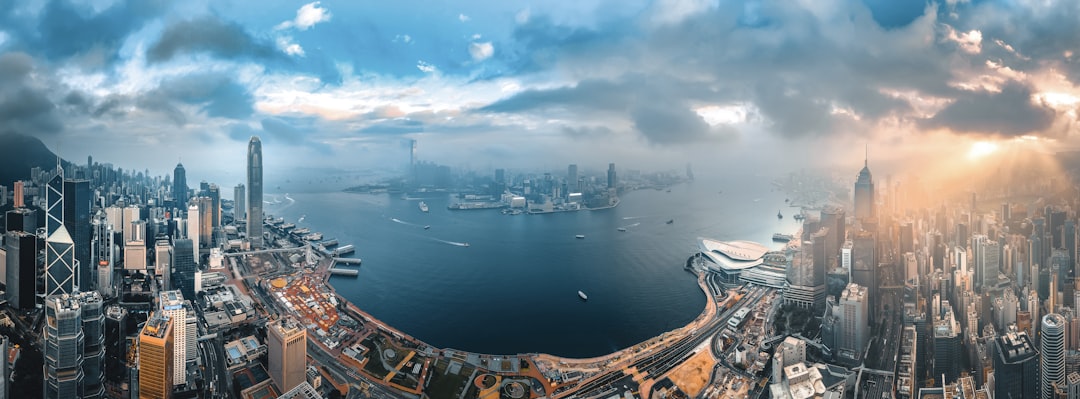
The premise, as spoon-fed to us by the Davos set, is that everything you need should be within a 15-minute walk or cycle from your front door. Work, school, shops, parks. No more long commutes, no more carbon-belching traffic jams. It's a lovely thought, like a village fete but with fewer tractor pulls and more oat milk lattes. But the subtext writhes beneath the surface like a serpent in a suit.
Who decides what you need? The same people who decided you need to eat bugs and own nothing. The 15-minute city is not a plan for convenience; it's a plan for control. Your radius is not a comfort zone; it's a cage. And the WEF, in its infinite wisdom, has appointed itself the zookeeper. They call it 'the great reset.' I call it a great big pile of horse manure dressed in a Hermès scarf.
Let's examine the fine print, shall we? The 15-minute city, as proposed by Professor Carlos Moreno, is a brilliant academic concept. But genius has a way of becoming grotesque when filtered through the prism of globalist ambition. Already, cities like Paris, Oxford, and Melbourne are experimenting with 'low-traffic neighbourhoods' and '15-minute districts.' On the surface, it's all cycle lanes and greengrocers. But dig deeper, and you find permits, quotas, and digital monitoring of movements. A system of permissions that would make a Soviet apparatchik blush with envy.
They say it's for the environment. They say it's for community. They say it's for your health. But when a government can restrict your movement to a 15-minute bubble, what happens when they decide you don't need to drive to see your elderly mother? What happens when your 'local' shop is closed because it's 'non-essential'? The 15-minute city becomes a 15-minute prison, and you will thank them for the privilege of your confinement.
I am not, of course, suggesting that the WEF is a cabal of lizard people plotting your enslavement. That would be absurd. They are simply technocrats, insufferably smug, convinced that humanity's problems can be solved with an app and a committee. Their vision is one of elegant efficiency, where every spare moment is optimised for productivity and every square foot of asphalt is triple-use. It is the death of spontaneity, the death of the long drive, the death of the accidental discovery of a charming pub 30 minutes from home.
And let us not forget the elephant in the room: the cost. The 15-minute city requires massive investment in infrastructure, surveillance, and enforcement. Who pays? You do, through taxes, and through the erosion of your liberty. Meanwhile, the architects of this scheme will flit between Davos and Dubai in their private jets, insulated from the very policies they impose.
So here's my counter-proposal: the 15-second city. Every citizen gets a gin distillery in their kitchen and a typewriter on their desk. We abolish planning departments and let chaos reign. It would be glorious, inefficient, and utterly human. But I suspect the WEF would not approve. It doesn't scale. It doesn't monetise. It doesn't control.
In the end, the 15-minute city is a fever dream from which we should all pray to wake. But since we're stuck in the nightmare, I'll be in the corner, bottle in hand, waiting for the moment when common sense, like a hangover, finally arrives. Cheers, you beautiful bastards.