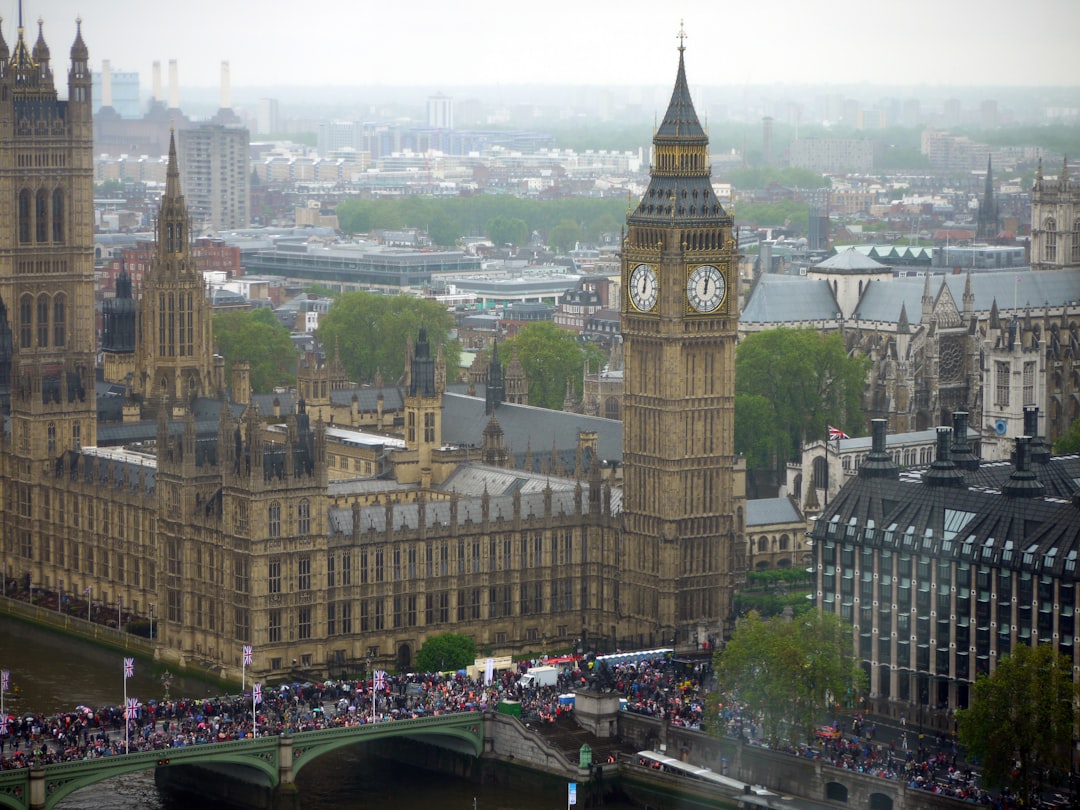
In a nation long defined by its unitary character, a quiet but seismic shift is underway. London and Manchester, two of the United Kingdom’s economic powerhouses, are behaving less like siblings in a family of nations and more like sovereign entities. Their decoupling from the national economic fabric raises profound questions about the future of British governance and equity.
The evidence is stark. London’s economy now rivals that of entire nations. Its gross value added per head exceeds the national average by over 70 percent, a chasm that has widened since the 2008 financial crisis. Manchester, while not as affluent, has carved out its own trajectory. Since the turn of the millennium, the city-region has outpaced the UK average in productivity growth, driven by a booming digital and creative sector. Both cities are increasingly disconnected from the sluggish national growth rate, which has hovered around 1.5 percent annually for the past decade.
This economic bifurcation is not accidental. Central government policies, from the Northern Powerhouse initiative to the devolution of fiscal powers, have catalyzed this divergence. Greater Manchester gained control over health, housing, and transport in 2015, and now negotiates directly with Whitehall as a quasi-city-state. London, through the Greater London Authority, has leveraged its financial dominance to attract global capital, often bypassing national frameworks. The result is a two-speed Britain: one of dynamic, globally oriented city-regions, and another of left-behind towns and coastal communities.
Critics argue that this decoupling exacerbates inequality. The Institute for Fiscal Studies notes that London’s public spending per person is 20 percent higher than the UK average, while the North East receives 15 percent less. Manchester’s devolution deal has allowed it to retain business rates, but this has not closed the gap with London. The city’s median wage is still £10,000 below the capital’s. As city-regions accumulate more power, national redistribution mechanisms weaken, deepening territorial disparities.
Proponents, however, see the decoupling as a necessary corrective to overcentralization. Manchester mayor Andy Burnham has championed the city-state model, arguing that local leaders know best how to address local needs. London mayor Sadiq Khan has pushed for greater control over housing and transport. They point to cities like Singapore and Hamburg as successful examples of city-states that thrive through autonomy. In this view, decoupling is not fragmentation but recognition of diversity: each city can pursue its comparative advantage without the dead hand of Westminster.
Yet the risks are palpable. A decoupled London could become a global tax haven, leaving the rest of the UK without its fiscal engine. The city’s dominance already skews national investment: for every pound spent on infrastructure in London, the North receives just 60 pence. If Manchester and London prioritize their own interests, what remains of the national project? The UK’s constitutional settlement, already strained by devolution to Scotland, Wales, and Northern Ireland, could become a patchwork of semi-autonomous regions, each negotiating its own terms of belonging.
There is also a democratic deficit. City-region mayors are not accountable to the national Parliament, yet their decisions shape national policy. The rise of metro mayors has created a layer of governance that bypasses traditional county and district councils, often with little public scrutiny. As cities exercise more influence, voices from suburban and rural areas become marginalized. The urban-rural divide, already deep, widens further.
What would a decoupled future look like? One scenario is a network of city-states, each with its own fiscal regime, housing policy, and trade links. London might charge its own carbon tax, while Manchester pioneers its own industrial strategy. National bodies like the Treasury or the NHS could become coordinating agencies, not central authorities. Alternatively, the decoupling could spur a backlash, as regions left behind demand greater redistribution or even their own devolution deals.
The government must act decisively. A new settlement is needed that balances local autonomy with national solidarity. This could involve a fiscal equalization system that ensures all regions benefit from city-state dynamism. Or it might require constitutional reforms that embed city-regions within a federal structure, akin to Germany’s Länder. Whatever the path, inaction risks driving the decoupling to a point of no return.
London and Manchester are not just cities; they are prototypes of a new political geography. Their rise signals the end of the unitary state as we know it. The question is whether the rest of Britain will join them in shaping this future—or be left watching from the margins.