
The Thames has always been a river of commerce, but the currents running through London’s financial and political arteries today are shifting with an intensity not seen since the aftermath of the 2008 crash. On a grey Tuesday morning in Canary Wharf, the towers of Barclays and HSBC reflect a sky heavy with uncertainty, while a mile to the east, the cranes of the Royal Docks signal a very different kind of future. This is London in 2025—a city navigating a post-Brexit regulatory pivot, a tech hub hungry for talent and capital, and a parliamentary landscape fracturing over how to balance growth with stability. For London Desk’s signature analysis, we have spent two months speaking with policymakers, financiers, and founders to decode the forces reshaping the capital.
Canary Wharf: The Accidental Tech Hub?
For decades, Canary Wharf was synonymous with global finance—a monument to the City’s dominance. But as hybrid work hollows out office occupancy and the Square Mile reclaims some of its luster, the Wharf is reinventing itself. “We are seeing a deliberate pivot,” says Eleanor Vance, chief economist at London First. “The vacancy rate in Canary Wharf hit 14% last year. Landlords are now offering flexible leases to fintech and AI startups, and it’s working.” The numbers support her: over 30% of new leases in the Wharf in Q1 2025 were signed by technology firms, up from 12% in 2019. Companies like Revolut and blockchain startup Settle are taking floors once occupied by investment banks. Yet the transition is not seamless. “The infrastructure is built for suits, not sneakers,” admits James Holcroft, founder of AI-driven analytics firm Cognix. “But the transport links and the sheer density of capital providers here keep us anchored.” The key is co-location: banks are now partnering with startups for pilot programs in everything from compliance tech to ESG scoring. Canary Wharf Group’s ‘Level39’ accelerator has expanded twice in two years, hosting 200 startups. The message is clear: finance is not dying—it is being rewritten.
Westminster’s Regulatory Dance
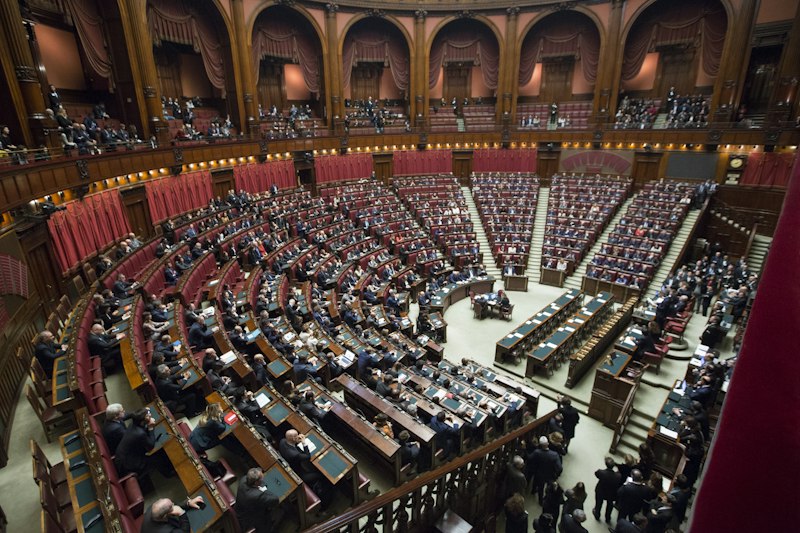
Across town, the Palace of Westminster is debating the very rules that govern these shifts. The Financial Services and Markets Act 2023 gave regulators a new secondary objective: competitiveness. But implementation has been cautious. “The Treasury Select Committee is under pressure to show that Brexit ‘dividends’ are real,” notes Dr. Alistair Finch, a constitutional law expert at King’s College London. “Yet no one wants a repeat of the 2022 mini-budget chaos. The result is a slow, incremental liberalisation.” The most contentious area is the ‘Edinburgh Reforms’—a package of measures to loosen capital requirements for insurers and streamline prospectus rules. Critics argue this risks a race to the bottom. “We are watching the UK become a laboratory for deregulation,” warns Caroline Mathers, a former FCA official now at the New Economics Foundation. “The Solvency II reforms could free up £100 billion for investment, but with little oversight, that money might not flow where it’s needed—like green infrastructure.” Meanwhile, the FCA’s new ‘consumer duty’ and ‘listing rules’ are creating a two-tier system: simpler for domestic firms, but still complex for international issuers. The result? A cautious optimism.
The parliamentary arithmetic adds another layer of uncertainty. The current government holds a slim majority, and backbench rebellions on planning reform and net-zero policies have stalled bills crucial for tech growth, such as the Data Protection and Digital Information Bill. “The gridlock is real,” says political analyst Robert Denholm. “Every piece of legislation is a knife-edge vote. That instability spooks investors looking for long-term certainty.” Yet some argue that the very messiness of Westminster is a feature, not a bug. “Our adversarial system forces debate. It’s slow, but it prevents catastrophic errors,” counters Sir Michael Harlow, a former Treasury permanent secretary. The outcome is a regulatory environment that is evolving more slowly than industry desires but more deliberately than critics fear.
The London Tech Hub: Bridging the Funding Gap
London remains Europe’s leading tech hub, raising £12.4 billion in venture capital in 2024—more than Paris and Berlin combined. But beneath the headline numbers, a funding gap is emerging. “Series A rounds are getting harder to close,” says Priya Mehta, partner at London-based VC Octopus Ventures. “Investors are demanding profitability, not just growth. The ‘ZIRP era’ spoiled everyone.” The shift is particularly acute in deep tech—quantum computing, synthetic biology—where capital intensity is high and timelines long. “The British Patient Capital scheme helps, but it’s not enough,” Mehta adds. “We need pension funds to allocate more to venture, as they do in the US.” Indeed, the Mansion House reforms, announced in 2023, aimed to channel defined contribution pension savings into unlisted equities. Progress has been slow: only 5% of DC assets are currently allocated to private markets, far below the 20% target by 2030. “The infrastructure is there—the London Stock Exchange, the legal framework, the talent—but the money is still too shy,” says Lord David Willetts, former universities minister and tech advocate.
Meanwhile, the physical tech hub is expanding beyond Shoreditch. King’s Cross, with Google’s new headquarters and the Francis Crick Institute, is becoming a life sciences powerhouse. The ‘Silicon Roundabout’ moniker has faded, replaced by a more distributed network—from Stratford’s Here East to White City’s Imperial College incubator. “Affordability is driving dispersal,” explains urban economist Dr. Fiona Zheng. “Startups can’t pay Shoreditch rents. The new hubs are in lower-cost zones with good transport links, like Bermondsey or Tottenham Hale.” This sprawl has benefits—it spreads economic activity—but it also dilutes the serendipity that clusters thrive on. The challenge for policymakers is to foster connectivity: hard infrastructure (Crossrail 2 is still a dream) and soft (networking events, shared labs). The newly launched ‘London Tech Ambassador’ role, held by former Deliveroo COO Lucy Adams, aims to coordinate this. Her first report, due next month, is expected to call for a ‘tech visa’ fast-track and a dedicated innovation fund for scale-ups.
Why This Matters
The interplay between Canary Wharf’s reinvention, Westminster’s cautious deregulation, and the tech sector’s capital hunger is not a niche concern—it is the equation that will determine London’s global standing for the next decade. If the UK can blend financial depth with regulatory agility and tech dynamism, it could forge a new model for post-industrial cities. If it fails—if gridlock persists, if funding dries up, if talent leaves for New York or Singapore—London risks becoming a museum of its own past glories. The stakes are that high. As one senior banker told us off the record: “We have two years to get this right. After that, the window closes.” The city’s leaders—in boardrooms, on the floor of the Commons, in startup garages—are all racing against the same clock.
Future Outlook: Cautious Optimism, With Caveats
Looking ahead to 2026, the consensus among our interviewees is mixed. “I’m optimistic about fintech, proptech, and green finance,” says Eleanor Vance. “But the broader macro environment—inflation, interest rates, geopolitical tensions—will test our resilience.” The UK’s departure from the EU continues to cast a shadow: although the ‘Brexit freedoms’ are being used, the loss of passporting rights for financial services has permanently altered the landscape. “We are now a regional hub, not a global one,” argues Alistair Finch. “That doesn’t mean decline, but it means we have to work harder.” The tech sector, meanwhile, is pinning hopes on AI. “The UK has world-class AI research—DeepMind, Alan Turing Institute—but commercialisation lags,” notes Priya Mehta. “The next government should make AI adoption a national mission, with tax incentives for SMEs.”
Politically, the next general election—expected in 2026—could bring a change of direction. Labour has promised a ‘modern industrial strategy’ with a focus on clean energy and digital infrastructure. But any new government will inherit a fragile fiscal position. “The headroom for bold action is minimal,” warns Robert Denholm. “So expect more tweaks than transformations.” Perhaps the most telling sign of London’s resilience is the sheer volume of construction: from the redevelopment of the Bishopsgate goodsyard to the new UCL campus at the Olympic Park, the city is betting on itself. The cranes are not just building towers; they are building a narrative. And for now, that narrative is one of adaptation—messy, contested, but unmistakably alive.