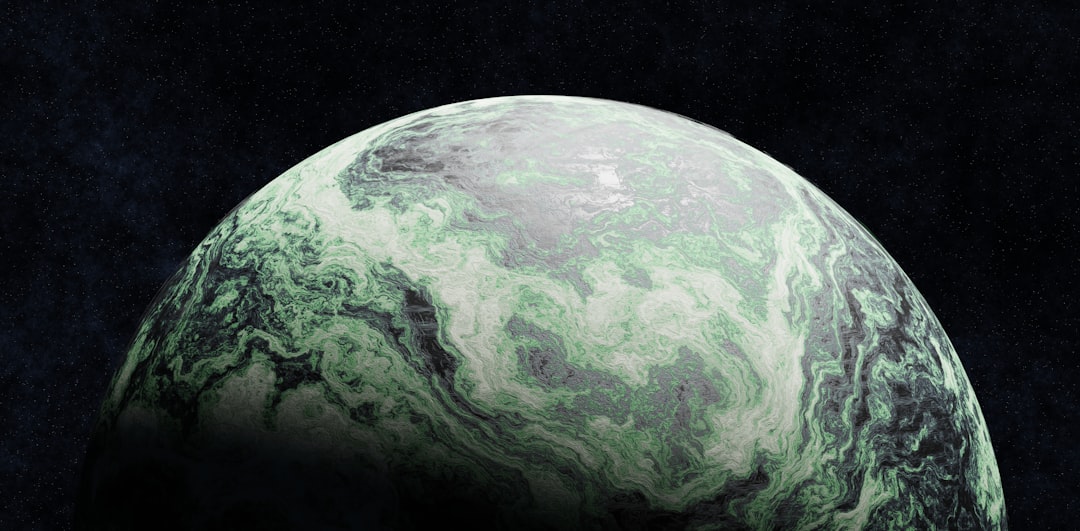
In a groundbreaking discovery that has sent ripples through the astronomy community, the James Webb Space Telescope has detected water vapor in the atmosphere of a rocky exoplanet for the first time. The findings, published this week in Nature, offer a tantalizing glimpse into the potential for habitable worlds beyond our solar system.
The exoplanet, designated GJ 486 b, is a rocky world roughly 30% larger than Earth. It orbits a red dwarf star located just 26 light-years away in the constellation Virgo. But don’t pack your bags just yet. This is no Earth twin. The planet is tidally locked, meaning one side always faces its star. Surface temperatures on the dayside soar above 400 degrees Celsius. Too hot for liquid water. Too hot for life as we know it.
Yet the discovery of water vapor is significant. It marks the first time astronomers have identified water in the atmosphere of a rocky exoplanet. Previous detections were on gas giants, where water is common but life unlikely. Rocky planets are the key to finding signs of life. And water is the essential ingredient.
“This is a big step forward,” said Dr. Sarah Kendrew, an astronomer at the European Space Agency who was not involved in the study. “We have finally confirmed that rocky planets can have atmospheres containing water. That gives us hope for finding truly habitable worlds.”
The detection was made using Webb’s NIRSpec instrument. Astronomers observed the planet as it transited its star, watching for the telltale fingerprint of water molecules in the starlight filtering through the atmosphere. It was a painstaking process, requiring multiple transits to build a clear signal.
But there is a twist. The water vapor could originate from the planet’s atmosphere. Or it could be from the star itself, which might have water vapor in its own cooler regions. The team is working to distinguish between the two possibilities. If it is from the planet, it suggests GJ 486 b has a thin, steamy atmosphere. A surprise. Models predicted that close-in rocky planets around red dwarfs would have their atmospheres stripped away by stellar radiation.
“We are seeing something unexpected,” said Dr. Laura Kreidberg, lead author of the study from the Max Planck Institute for Astronomy. “If the water is from the planet, it tells us that planets can hold onto their atmospheres even in harsh environments. That expands the range of potentially habitable worlds.”
The next step is to observe the planet’s other side. If the water is atmospheric, it should be present across the planet. The team plans to use Webb to measure the planet’s dayside emission spectrum. That will reveal whether water exists in a global atmosphere or is merely a local phenomenon.
Meanwhile, astronomers are already eyeing other rocky exoplanets for similar studies. The TRAPPIST-1 system, with seven Earth-sized worlds, is a prime target. Three of those planets sit in the habitable zone. But their star is also a red dwarf, prone to flares that could strip atmospheres.
“This discovery shows that Webb is up to the task,” said Dr. Kendrew. “We can now characterize rocky planet atmospheres in detail. The next few years will be very exciting.”
The detection of water vapor on GJ 486 b does not mean the planet is habitable. But it means that the tools are in place, and the search for life beyond Earth has a new, powerful ally.