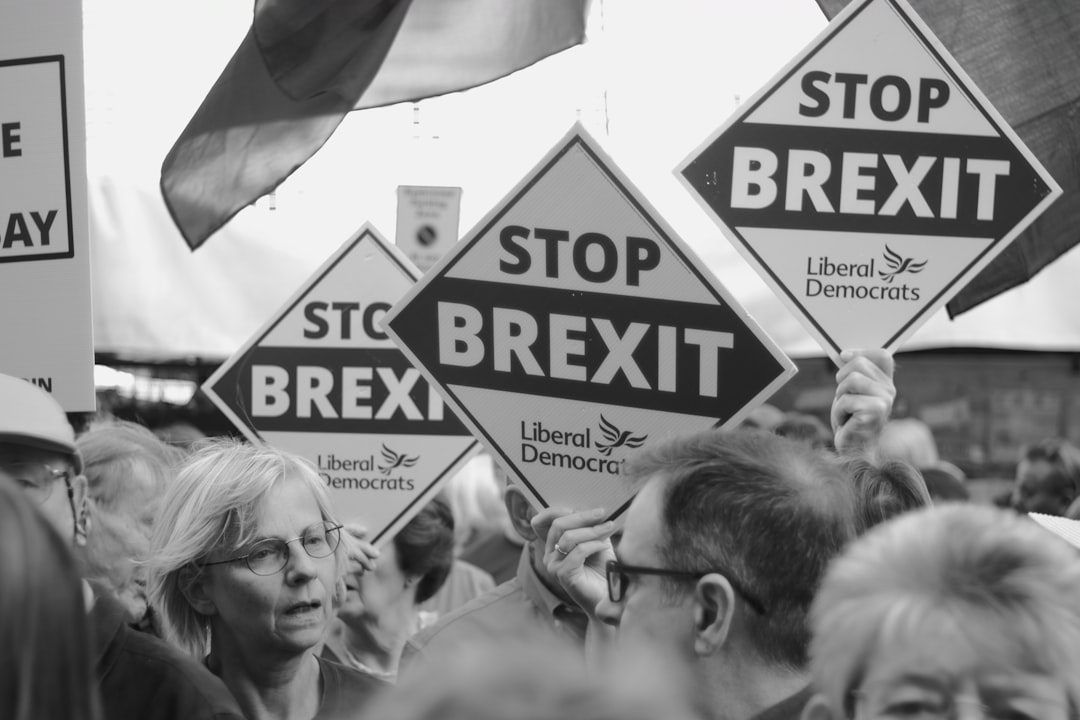
A decade after the United Kingdom formally left the European Union, the two entities are set to embark on a new chapter of dialogue, with trade talks resuming in what many hope will be a more pragmatic era of cooperation. The negotiations, which officially commenced this week in Brussels, aim to recalibrate the economic and political relationship that has been strained since the 2016 referendum and the subsequent withdrawal agreement.
The backdrop to these talks is a markedly different geopolitical landscape. The UK, under the Labour government elected in 2024, has sought to repair relations with its European neighbours, distancing itself from the confrontational stance of the previous Conservative administration. Prime Minister Keir Starmer has emphasised a ‘reset’ in UK-EU relations, focusing on mutual benefits rather than past grievances. Meanwhile, the EU, grappling with its own challenges—from the war in Ukraine to economic stagnation—views a stable partnership with the UK as strategically vital.
At the heart of the new talks is a comprehensive review of the Trade and Cooperation Agreement (TCA), signed in December 2020. While the TCA provided a framework for zero-tariff trade in goods, it left significant gaps in services, professional qualifications, and security cooperation. British exporters, particularly in the financial services and legal sectors, have faced barriers that the government hopes to dismantle. ‘We need a relationship that works for both sides, one that reduces friction at the borders and allows our brilliant service industries to flourish,’ a government spokesperson stated.
Key issues on the table include mutual recognition of professional qualifications, which would ease the movement of lawyers, architects, and accountants. The UK is also pushing for a deal on veterinary standards to reduce border checks on agri-food products, a move that would benefit farmers and mitigate supermarket shortages. In exchange, the EU is demanding robust guarantees on environmental and labour standards to prevent a race to the bottom—a sticking point that sank the previous negotiations.
Immigration remains a sensitive topic. The UK will not rejoin the EU’s freedom of movement framework, but there is interest in advancing schemes for youth mobility, allowing young people to work and study across the channel more easily. The EU views such arrangements as a litmus test of British goodwill. Negotiators are also exploring how to streamline data protection agreements to facilitate digital trade, a critical sector for both economies.
Beyond trade, security and foreign policy alignment are emerging as priorities. The UK’s global intelligence capabilities and military prowess are assets the EU values, especially in counterterrorism and countering hybrid threats. A new security pact could complement the trade talks, offering reciprocal access to databases and joint exercises. In the context of Brexit, such cooperation would symbolise a mature departure—leaving the EU institutionally but remaining a close partner in practice.
Critics, however, caution that these talks may overpromise and underdeliver. ‘The EU is a rule-based institution; they won’t hand out bespoke deals without alignment,’ said Professor Lindsay Newman of the London School of Economics. Domestic political pressures also loom. Devolution has led to different regulatory regimes within the UK, complicating negotiations. Wales and Scotland have distinct interests in fisheries and agriculture that could clash with Westminster’s objectives.
As the talks unfold, public sentiment has shifted. Recent polls indicate that a majority of Britons now view Brexit negatively, but a return to membership remains off the table. The discussion has instead focused on ‘Brino’ (Brexit in name only), where the UK adopts EU rules to smooth trade without political integration. This pragmatic approach mirrors the European stance, where leaders have moved from punishing the UK to safeguarding their own interests.
The coming months will test whether both sides can overcome the mistrust built over a decade. For now, the negotiators have set an ambitious timeline of June for an outline agreement. As one EU diplomat put it: ‘We are not seeking a divorce settlement; we are seeking a marriage of convenience.’ The outcome will define the UK’s place in the world and the EU’s capacity to manage a partner beyond its borders.